
Emergency Dentist of Austin
Jaw Injury or Dental Injury? Knowing Which One Needs the ER First
If you are trying to work out whether you have a jaw injury or broken tooth, use one test first: does your bite still line up? If your teeth suddenly meet in the wrong place, you cannot open or close fully, or your lower lip and chin feel numb, treat it as a jaw fracture and go to an emergency room. If the bite is normal and the damage is limited to a tooth, gum, or filling, an emergency dentist is the faster and cheaper stop.
Anything involving the head blacking out, vomiting, confusion, or clear fluid draining from the nose or ears outranks both. Call 911 or go straight to an ER.
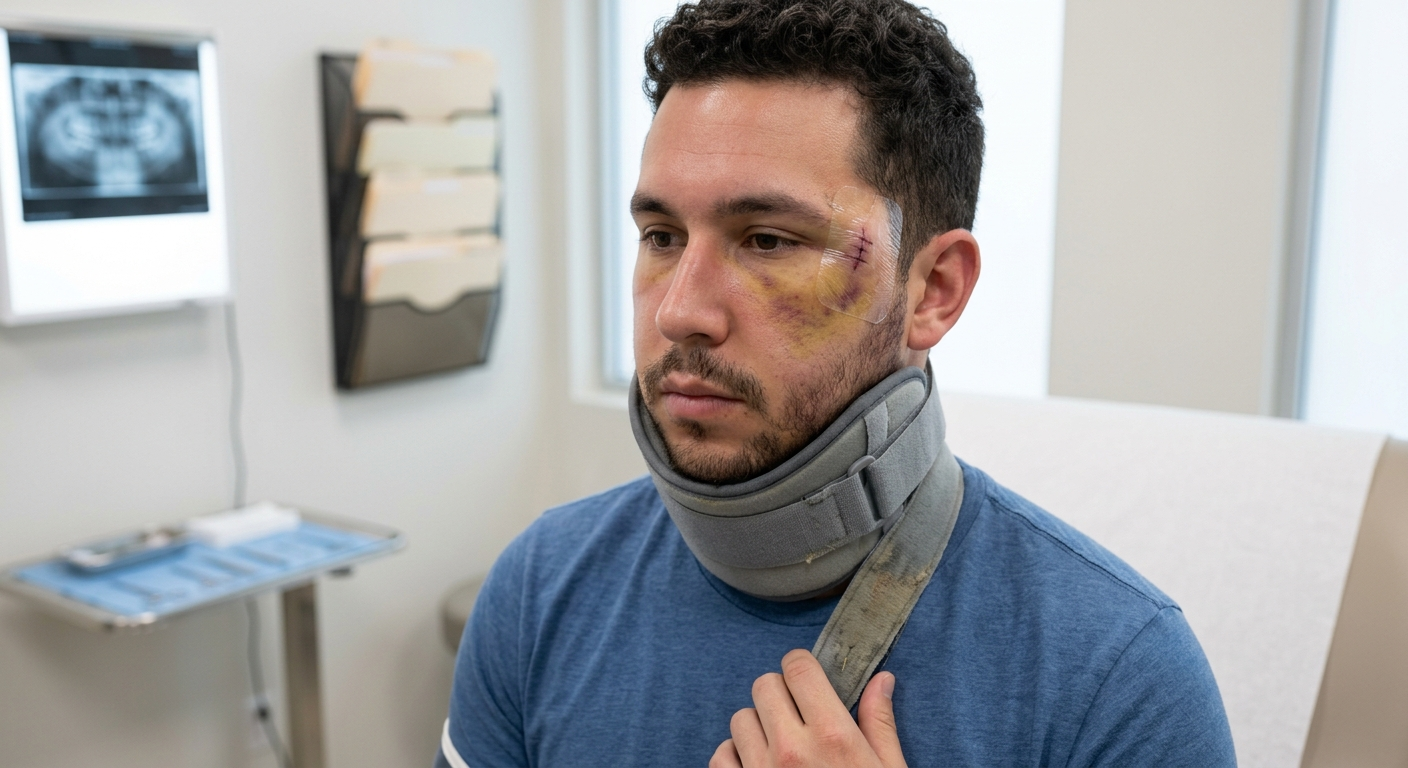
Key Takeaways
- A bite that no longer lines up is the single strongest sign of a broken jaw. Go to an ER, not a dental office.
- Numbness in the lower lip or chin, or bruising under the tongue, points to a mandible fracture even when the pain seems manageable.
- Head-injury signs override everything else. Loss of consciousness, vomiting, confusion, or clear fluid from the nose or ears means 911.
- Broken, loose, or knocked-out teeth, cut gums, and lost crowns belong to an emergency dentist. Once a medical emergency is ruled out, call Emergency Dentist of Austin at (512) 961-6200.
How do I tell a jaw injury from a dental injury?
Quick Answer: Jaw injuries change how your whole bite works. Dental injuries change one tooth. If your teeth no longer meet the way they did an hour ago, or your jaw will not open or close through its full range, the problem is structural and needs an ER. If you can open, close, and bite normally but a tooth is chipped, loose, or gone, that is dental.
The distinction matters because the two problems are treated in completely different buildings. A fractured mandible is repaired by an oral and maxillofacial surgeon, usually after a CT scan. A fractured tooth is repaired in a dental chair, often the same day
What are the head-injury red flags that override everything?
Quick Answer: Some signs mean the brain, not the face, is the priority. Loss of consciousness, repeated vomiting, confusion, or clear fluid draining from the nose or ears all require emergency medical care immediately. Do not drive yourself, and do not stop at a dental office first.
⚠️ Call 911 or go to an ER now if any of these are present:
- Any loss of consciousness, even for a few seconds
- Vomiting, especially more than once
- Confusion, slurred speech, or no memory of the impact
- Clear or watery fluid from the nose or ears
- A seizure, unequal pupils, or new weakness in an arm or leg
- Drowsiness you cannot shake off, or a headache that keeps worsening
- Bleeding you cannot control, or difficulty breathing or swallowing
Two extra notes. If you take a blood thinner, the threshold for being checked after a head impact is much lower go and be assessed. And if a tooth is missing after a facial injury and you cannot find it anywhere, mention that at the ER. An unaccounted-for tooth occasionally ends up in the airway and needs a chest X-ray to rule out.
In Austin, the Dell Seton Medical Center area downtown is the region's Level I trauma centre and is where serious facial and head injuries are usually directed. For children, Dell Children's Medical Center in Mueller fills the same role.
What signs point to a broken or dislocated jaw?
Quick Answer: The five signs that matter most are a bite that no longer lines up, an inability to open or close fully, numbness in the lower lip or chin, bruising under the tongue, and pain directly in front of the ear. Any one of them is enough to send you to an ER, even if the pain is mild.
Bruising under the tongue is the one most people miss because they never look. It is worth checking in a mirror. Blood tracking into the floor of the mouth after a facial blow is strongly associated with a lower-jaw fracture.
A dislocation feels different from a fracture. The jaw locks open, often after a blow or a very wide yawn, and will not close. Do not try to push it back yourself. Support it, keep still, and get to an ER.
Which injuries belong to an emergency dentist instead?
Quick Answer: If your jaw is working normally and there are no head-injury signs, everything else after a facial impact is dental. That includes broken, chipped, loosened, and knocked-out teeth, cut gums and lips, and crowns or fillings that came out on impact.
An emergency dentist handles:
- Chipped or broken teeth, including fractures deep enough to expose the pink nerve
- Loosened or pushed-out-of-position teeth that need repositioning and splinting
- Knocked-out permanent teeth keep the tooth in milk and get in fast
- Teeth driven up into the gum after impact
- Cut gums, lips, or tongue that may need stitches
- Lost crowns, fillings, or veneers knocked loose in the collision
- Broken dentures or partials
This is the work Dr. Tarsem Lal, DDS and the team at Emergency Dentist of Austin do daily on our Emergency Dentistry visits assessing facial trauma, taking the X-ray that tells you what is really going on beneath the gum, and routing patients to the right level of care rather than treating around a problem that belongs in a hospital.
ER or emergency dentist: what can each one actually do?
Quick Answer: An ER can rule out a fracture, a bleed, or a brain injury, and can stabilise you. It usually cannot treat the tooth. An emergency dentist can treat the tooth but cannot manage a head injury. Neither is a substitute for the other.
This is why patients who go to an ER for a purely dental problem often leave with antibiotics and painkillers, a large bill, and the same broken tooth they arrived with.
Why do many patients need both, in sequence?
Quick Answer: A single impact frequently breaks the jaw and the teeth. The correct order is medical first, dental second. The hospital rules out what can kill you or leave permanent damage; the dentist then deals with what is left.
There is one exception worth knowing. A knocked-out adult tooth has the best chance of survival if it goes back into the socket within about 30 minutes. If you are heading to an ER anyway, put the tooth in a cup of milk, take it with you, and call us on the way. Teeth that cannot be saved are handled through Emergency Extractions, ideally before infection sets in.
What should I do in the first 15 minutes?
- Check for head-injury signs first. If any are present, call 911 and stop here.
- Test the bite. Close gently. If the teeth meet wrongly, go to an ER.
- Test opening and closing. If either is blocked, go to an ER.
- Check the lower lip and chin for numbness, and look under the tongue for bruising.
- Control bleeding with firm, continuous pressure on clean gauze for 10–15 minutes.
- Apply a cold compress to the outside of the face, 20 minutes on, 20 off.
- Find any missing tooth or fragment. Store a whole tooth in milk. Never scrub the root.
- Do not eat, and stick to soft or liquid food until you have been assessed.
- Call (512) 961-6200 once a medical emergency has been ruled out.
Frequently Asked Questions
Can a broken jaw feel like just a bad toothache? Yes, particularly with a hairline fracture near the back teeth. The giveaway is the bite: toothache does not change how your teeth meet, and a fracture usually does. Any change in your bite after an impact should be checked at an ER.
How do I know if my jaw is broken or just badly bruised? A bruised jaw is sore but still works you can open, close, and bite normally. A fractured jaw usually brings a changed bite, restricted opening, numbness in the lip or chin, or bruising under the tongue.
Why does numbness in my chin matter so much? A nerve runs through the lower jawbone to supply the lip and chin. New numbness there after an impact often means the bone around that nerve has been broken or compressed, so it is treated as a fracture until imaging says otherwise.
Should I go to the ER for a knocked-out tooth? Only if you also have head or jaw injury signs. On its own, a knocked-out tooth is best handled by a dentist, because ERs cannot replant teeth. Keep it in milk and call (512) 961-6200 immediately.
What if my jaw is stuck open and I cannot close it? That is most likely a dislocation, and it needs an ER. Do not force the jaw shut or let anyone push on it an untrained attempt can cause further injury.
Can my dentist take an X-ray of my jaw? A dental X-ray shows teeth and the bone immediately around them, and can pick up some fractures. It does not replace a hospital CT scan, which is what facial and jaw fractures are properly assessed with.
How long can I wait to see a dentist after a facial injury? Same day where possible, and within 24 hours at the outside. Loosened teeth, exposed nerves, and displaced teeth all do better the sooner they are stabilised.
My tooth looks fine but hurts to bite on. Is that serious? It can be. Pain on biting after trauma may mean a root fracture or a bruised ligament around the tooth, neither of which is visible without an X-ray. Have it checked rather than waiting to see if it settles.
Do I need a tetanus shot after a mouth injury? If the injury involved dirt, gravel, or a fall outdoors and your tetanus cover is out of date, mention it at the ER or to your doctor. Clean indoor injuries to the mouth rarely require one.
Can a jaw injury cause long-term problems if I ignore it? Yes. A fracture that heals in the wrong position can permanently change your bite and lead to chronic jaw joint pain, and it becomes much harder to correct later. Early imaging avoids that.
Are you open on weekends? Yes. Emergency Dentist of Austin is open Monday, Friday, Saturday and Sunday, 8am to 8pm the hours when most general practices around Austin are closed.
Which areas do you serve? We see patients from Austin, Round Rock, Cedar Park, Georgetown, Leander, Kyle, Buda, Lakeway, Bee Cave, West Lake Hills, Hutto, Manor, Dripping Springs, Del Valle, Elgin and Liberty Hill.
The bottom line
Run the checks in order: head signs first, bite second, tooth third. Head-injury signs mean 911. A bite that will not line up, a jaw that will not open or close, numbness in the lip or chin, or bruising under the tongue means an emergency room. Everything else after a hit to the face broken teeth, loose teeth, cut gums, lost crowns is dental work, and the sooner it is seen the more of the tooth can usually be saved.
Read More
.jpg)
Swollen Gums and Bad Breath: What's Causing Both in Austin, TX
.jpg)
Swollen Gums That Won't Go Away: What to Do in Austin, TX
.jpg)
Gingivitis vs Periodontitis: What Austin, TX Patients Should Know
Don't Wait Out the Pain
