
Emergency Dentist of Austin
Tooth Hurts When I Bite Down: Causes and Next Steps in Austin, TX
When a tooth hurts when I bite down, the pain is often a sharp flash or a deep ache that settles until the next chew. Pain on biting is one of the more common reasons people come in for a same-day exam.
Short Answer
A tooth that hurts when you bite down often points to a crack, a loose or worn filling, or inflammation around the tooth's root. The pain can be brief and easy to work around at first, which is why people delay. An exam and X-ray are the way to find the cause and protect the tooth before the crack or infection grows.
Key Takeaways
- Pain on biting is often a mechanical problem, such as a crack or a failing filling.
- The tooth can look normal and still have a hairline crack that only hurts under pressure.
- Swelling, lingering pain after you bite, or a bump on the gum means you should be seen promptly.
- Avoid chewing on that side until the tooth has been examined.
- Same-day toothache treatment can usually start once we know the cause.
Why a Tooth Hurts When I Bite Down
MedlinePlus lists tooth decay, an abscessed tooth, and tooth trauma such as wear, injury, or fracture among the usual causes of a toothache. When the pain shows up mainly as you close your teeth together, we often find one of these:
- A cracked tooth. Pressure opens the crack for a moment and irritates the pulp or the ligament around the root. The tooth may hurt on release, too, when you stop biting.
- A loose, worn, or leaking filling. The filling can flex or leave a gap, and biting pushes on the sensitive area underneath.
- Decay that has reached a deeper layer of the tooth.
- A high filling or crown. If a recent restoration sits a little tall, that one tooth takes more force than it should.
- Inflammation or infection around the root, including an abscess. In that case, the tooth can feel tender when you tap it or chew.
- A tooth that has started to loosen because of trauma or gum problems.
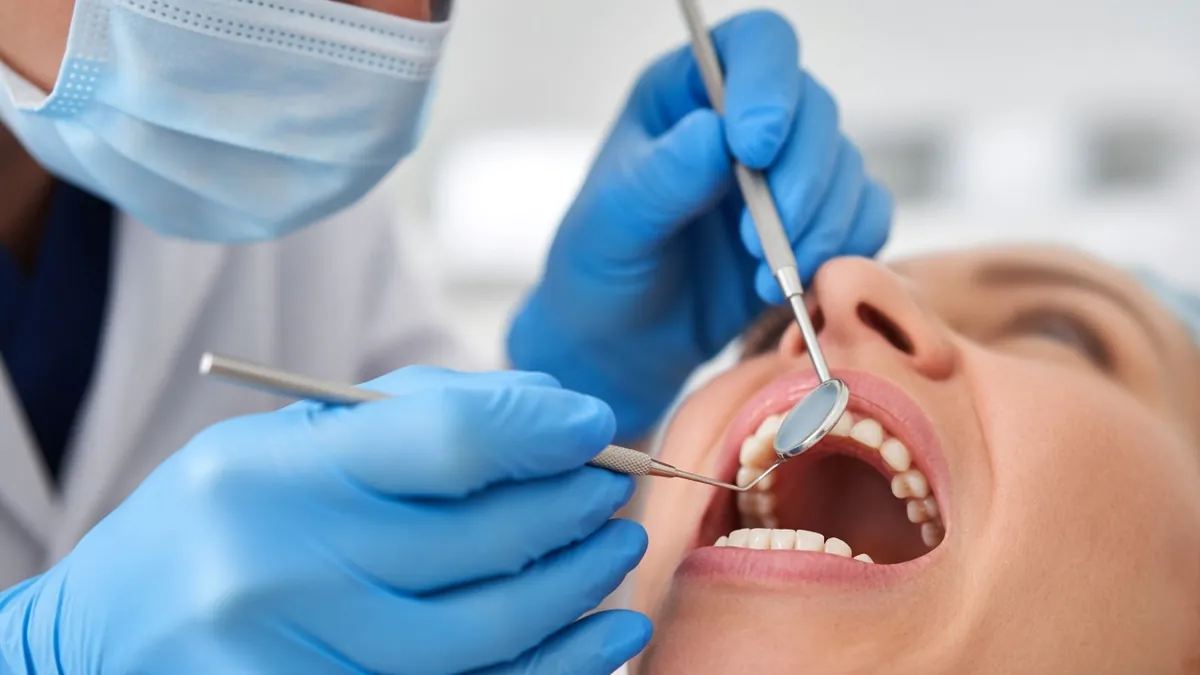
A same-day exam with Dr. Dudeen or another dentist on our team can usually show whether the problem is a crack, a worn filling, or something deeper.
How We Tell the Causes Apart
The pattern of the pain is useful, but it is not a diagnosis by itself.
- A sharp flash only when you bite, especially on something hard or crunchy, often fits a crack or a failing filling.
- Pain that lingers after you bite, or that starts throbbing later, is more concerning for the pulp or an infection.
- If several upper teeth ache and the pain changes when you bend forward, sinus pressure may be involved.
- If only one tooth is tender when we tap it, the problem is usually that tooth.
We also look for a visible crack, a broken cusp, a gap around an old filling, or swelling in the gum. An X-ray helps us see the root and the bone, though some cracks still do not show clearly on an image. In those cases, the way the tooth responds to pressure is an important clue.
If a crack is the likely cause, our cracked tooth treatment page explains how we protect and restore the tooth.
If temperature bothers the same tooth even when you are not chewing, see our guide to a tooth that is sensitive to hot and cold.
What To Do Until You Are Seen
- Stop chewing on that side. A cracked tooth can split further under force.
- Stick to softer foods, and skip hard, sticky, or very crunchy items.
- Take an over-the-counter pain reliever if you can use it, following the label.
- A cold compress on the cheek can help if the area feels sore.
- Save any piece of tooth that broke off, and bring it with you if you can.
- Do not try to glue a piece back or use household cement on the tooth.
Get in sooner, not later, if you have swelling, a fever, a bad taste, or pain that continues after you stop biting.
Why This Is Worth Checking Even If the Pain Is Brief
A crack or a leaking filling can stay "only when I bite" for a while. Then bacteria reach the pulp, and the tooth starts to ache on its own or throb at night. Treating the cause early can mean a filling or a crown instead of a root canal or an extraction.
Our office is at 1030 Norwood Park Blvd #324, Austin, TX 78753. If the pain started after one unlucky bite, we can often see you the same day.
FAQ
Why does my tooth hurt only when I bite down?
The force of biting can flex a crack, a loose filling, or an inflamed ligament. The tooth may feel fine at rest and still need treatment.
Can a cracked tooth heal on its own?
No. A crack in a tooth does not knit back together the way a bone can. The tooth needs to be protected and treated so the crack does not spread.
Is it safe to wait until Monday?
If the pain is mild, there is no swelling, and you can avoid chewing on that side, a short wait may be workable. If the pain is getting worse, or you notice swelling, a fever, or a broken piece of tooth, call us rather than waiting.
Why does it hurt when I stop biting, not just when I bite?
Pain on release is a classic clue for a crack. The crack flexes open under pressure and then snaps closed.
Will I need a root canal?
Not always. Some cracked or worn teeth can be treated with a filling or a crown. A root canal is more likely if the pulp is already inflamed or infected. The exam is what tells us which one you need.
If a tooth hurts every time you chew, call Emergency Dentist of Austin at (512) 961-6200. We will find the cause and treat it before a small crack or a worn filling becomes a bigger problem.
Read More

Tooth Sensitive to Hot and Cold: Causes and Relief in Austin, TX
Tooth Hurts When I Bite Down: Causes and Next Steps in Austin, TX
Throbbing Tooth Pain: What It Means and When to Get Help in Austin, TX
Don't Wait Out the Pain
