
Emergency Dentist of Austin
Scooter, Bike, and Skate Injuries: Austin's Most Common Cause of Broken Front Teeth
If you have just broken a front tooth in a scooter, bike, or skate fall in Austin, do three things now: find every piece of the tooth and keep it wet, press clean gauze on the lip for ten minutes, and call (512) 961-6200. Broken fragments can sometimes be bonded straight back onto the tooth, which is why they are worth picking up off the pavement.
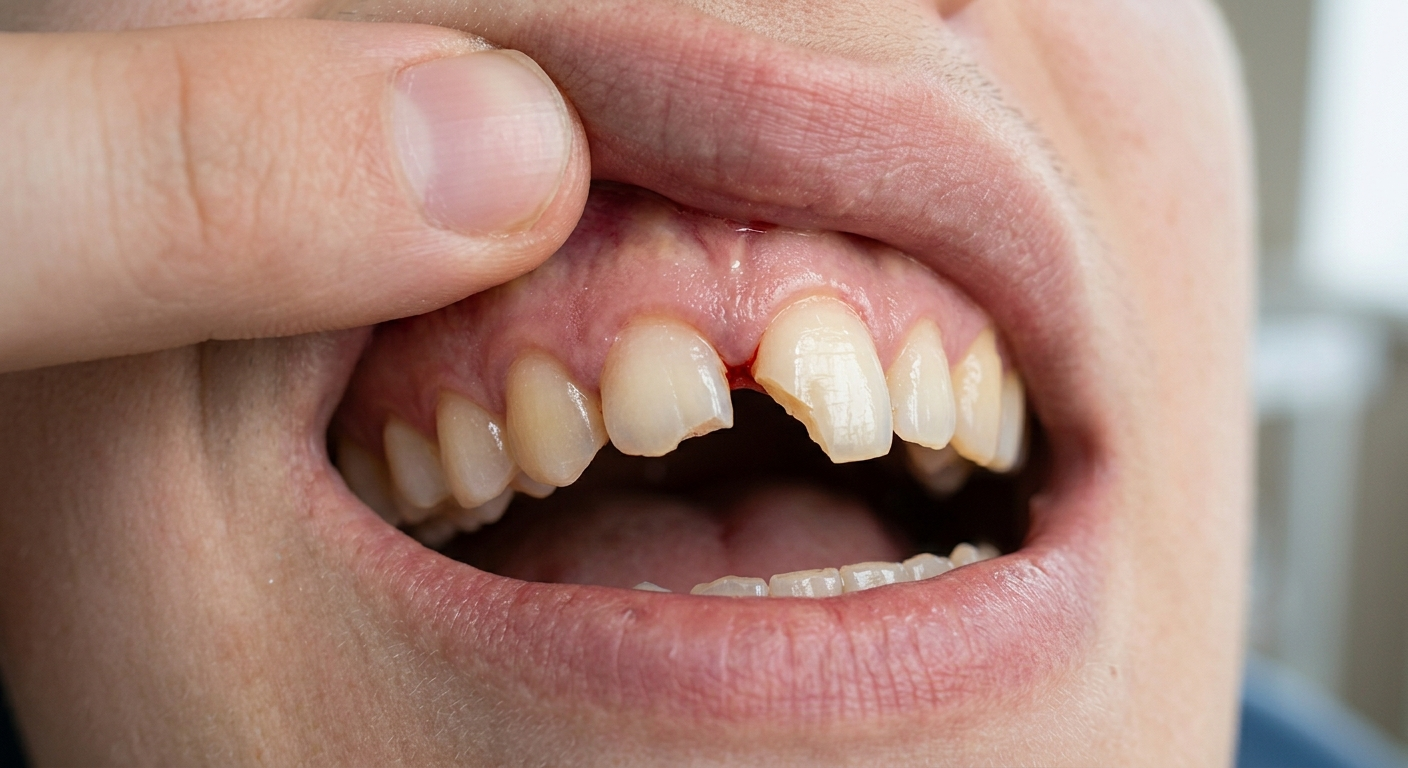
Most riders are more embarrassed than hurt, and most underestimate the damage. A chipped edge is the visible part. Root fractures, exposed nerves, and loosened neighbouring teeth are the parts that only an X-ray finds.
Key Takeaways
- Collect every fragment and keep it moist. A dry fragment loses strength and colour, and may no longer be usable.
- The visible chip is rarely the whole injury. Root fractures and loosened neighbours are common and painless at first.
- Control lip bleeding with firm pressure, then check your bite. If your teeth no longer meet correctly, that is a jaw problem and needs an emergency room.
- Same-day care gives you the most repair options. Call Emergency Dentist of Austin at (512) 961-6200 and bring the pieces with you.
Why do front teeth break in a forward fall?
Quick Answer: In a forward fall your hands are usually still on the handlebars or out of position, so nothing breaks the fall. The face lands first, and the upper front teeth are the most forward point on the face. They take the impact directly, with the upper lip crushed between the pavement and the tooth edges.
The physics are unforgiving. A scooter or bike stops suddenly; the rider does not. The body pivots forward over the front wheel and the head leads. There is no time to get an arm out.
The upper central incisors the two big front teeth stick out further than anything else and have thin, straight edges. They are also the thinnest teeth in the mouth from front to back. That combination is why they chip, and why chips usually run diagonally across a corner.
People with front teeth that already sit forward are at higher risk, simply because there is less lip covering them. That is worth knowing if you ride regularly.
Why does this happen so often in Austin?
Quick Answer: Austin combines dense scooter traffic with surfaces that catch a small front wheel. The downtown scooter routes around Rainey Street and the paths near Lady Bird Lake produce a steady stream of front-tooth injuries, especially at night and on weekends.
The specific hazards are consistent: brick and paver sections, expansion joints, curb transitions, damp boardwalk decking, and unlit stretches of trail. A scooter wheel is small enough to drop into a gap that a bike would roll over.
Add two more factors. Many riders are visitors who have never used that model of scooter before. And falls cluster in the evening, when the light is worse and reaction time is slower.
⚠️ Go to an emergency room first if any of these apply:
- You lost consciousness, even briefly, or cannot remember the fall
- You are vomiting, confused, or unusually drowsy
- Clear fluid is draining from your nose or ears
- Your bite suddenly does not line up, or you cannot open or close fully
- Your lower lip or chin feels numb
- Bleeding will not stop with firm pressure
Teeth can wait an hour. A head or jaw injury cannot.
What should I do in the first ten minutes at the scene?
Quick Answer: Get off the path, find the fragments and keep them wet, press on the lip to stop the bleeding, then check whether your teeth still meet normally. Do that in order, and you preserve almost every repair option.
- Move somewhere safe and sit down. Adrenaline hides pain, so do not judge the injury by how it feels right now.
- Rinse your mouth gently with cool water. Do not scrub, and do not swish hard.
- Find every fragment. Look on the ground where you landed, and check your clothing and helmet. Fragments are small and pale and easy to miss on concrete.
- Keep the pieces moist. Milk is best. Saline or a sealed container with your own saliva also works. Do not wrap them dry in a tissue.
- Control lip bleeding with clean gauze or cloth, firm continuous pressure, ten to fifteen minutes without lifting to check.
- Apply a cold compress to the outside of the lip, twenty minutes on and twenty off.
- Bite together gently. If your teeth meet the way they always have, the jaw is probably fine. If not, head for an emergency room.
- Feel the inside of your lip for grit or a hard lump embedded debris is common and needs removing.
- Call (512) 961-6200 and say you have had a fall and have fragments with you.
Do not try to file down a sharp edge yourself, and do not glue anything.
Why are the broken pieces worth saving?
Quick Answer: A fragment of your own tooth can sometimes be bonded straight back onto the tooth in a single visit. Your own enamel matches the colour, translucency, and wear pattern of the tooth perfectly, which no filling material fully replicates.
Fragment reattachment is not always possible it depends on the size of the piece, how cleanly it broke, and whether the nerve is exposed. But it is worth the thirty seconds it takes to look on the ground, because the alternative is rebuilding the corner from composite resin.
The critical part is moisture. A fragment that dries out becomes brittle and chalky, loses its translucency, and bonds less reliably. Keep it wet from the moment you pick it up.
Bring every piece, even ones you think are too small. Sorting them out is our job, not yours.
Is it just a chip, or is something else broken?
Quick Answer: The chip you can see tells you almost nothing about the rest. Root fractures, exposed nerves, and loosened neighbouring teeth are common after a face-first fall, and all three can be painless in the first few hours.
That last row matters more than people expect. A piece of tooth that cannot be accounted for is either on the pavement, in your lip, or somewhere it should not be. Say so when you call.
What hides behind an obvious chip?
Quick Answer: Four things: a root fracture below the gum, a nerve exposed at the break, neighbouring teeth loosened by the same blow, and debris driven into the lip. None of them are visible in a mirror.
- Root fracture. The crown looks intact or lightly chipped, but the root has cracked beneath the gum. Only an X-ray shows it, and the position of the fracture decides whether the tooth can be saved.
- Pulp exposure. If the break is deep enough to reach the nerve, bacteria have a direct route in. Treated within hours, the nerve can often be capped and saved. Left for days, it usually cannot.
- Loosened neighbours. The force spreads sideways through the bone. The tooth next to the broken one is frequently bruised or slightly loose, and needs checking even though it looks fine.
- Embedded debris. Grit, asphalt, and tooth fragments get driven into the inside of the lip. Left in place they cause infection, and dark particles can leave a permanent mark in the tissue.
Dr. Tarsem Lal, DDS and the team at Emergency Dentist of Austin handle these falls regularly — rebuilding front teeth in a single visit where the injury allows, and taking the X-rays that separate a simple chip from a root fracture. That assessment is the reason to come in even when the chip looks minor. You can read more about what a visit involves on our Emergency Dentistry page.
Bonding, veneer, or crown: how is the repair chosen?
Quick Answer: The choice depends on how much tooth is left, whether the nerve is involved, and whether the root is intact. Small and medium breaks are usually fixed the same day with your own fragment or with composite bonding. Veneers and crowns are lab-made and come later.
Two points shape the sequence. First, definitive cosmetic work waits until the lip swelling settles, because shade and shape cannot be judged accurately against a swollen lip. Second, an injured front tooth needs its nerve monitored for months a tooth that tests healthy on day one can still die later, which is why grey discolouration weeks afterward is a reason to come back. Cases where the nerve does not survive are handled through our Cracked Tooth service.
What does the timeline look like?
Quick Answer: Same-day treatment stabilises the tooth. The cosmetic finish and the nerve outcome are decided over the following weeks and months.
Frequently Asked Questions
Can a broken front tooth be fixed the same day? Usually yes. Fragment reattachment and composite bonding are both single-visit procedures, and sharp edges can always be smoothed and sealed immediately even when the final repair comes later.
How long can I keep a broken piece of tooth before it is useless? Keep it moist and bring it in the same day. A fragment stored dry starts losing colour and bond strength within hours, and a badly dehydrated piece may not be usable at all.
Does a chipped front tooth always hurt? No. Enamel has no nerve supply, so a shallow chip can be completely painless. Sensitivity to cold or air usually means the break has reached the deeper layer.
How much does a broken front tooth cost to fix in Austin? It depends entirely on the repair. Bonding and fragment reattachment sit at the low end, while a crown or a root canal with a restoration costs considerably more ask for a written estimate before treatment starts.
My tooth broke a week ago and now it is turning grey. Why? Greying usually means the nerve inside died from the impact. It is not cosmetic and does not resolve on its own, so have it assessed rather than covering it up.
Do I need a tetanus shot after falling on pavement? If the fall involved dirt or gravel and your tetanus cover is out of date, mention it to a doctor or at the ER. Mouth injuries from clean surfaces rarely require one.
Should I go to the ER or a dentist for a broken tooth from a bike fall? A dentist, unless you also have head or jaw injury signs. Emergency rooms cannot bond, splint, or X-ray individual teeth, so a purely dental injury usually means paying twice.
Can the tooth next to the broken one be damaged too? Yes, and often is. The impact spreads through the bone, leaving neighbouring teeth bruised or slightly loose which is why every tooth in the area gets checked, not just the obvious one.
What if I cannot find the broken piece? Come in anyway and say it is missing. Composite bonding rebuilds the corner well, and we will check that the fragment is not lodged in your lip.
Can I still ride home after a fall like this? Only if you have no head injury signs and you feel steady. If you have any doubt, get a ride a second fall on the way home is a genuinely common outcome.
I only chipped it slightly. Is it really worth coming in? Yes, because the chip is the part you can see. The X-ray is what rules out a root fracture and confirms the neighbouring teeth are stable.
Are you open on weekends? Yes Monday, Friday, Saturday and Sunday, 8am to 8pm, which covers the evenings and weekends when most of these falls happen.
The bottom line
Nobody plans to lose a corner of a front tooth on the way home. The good news is that these injuries repair well when they are seen quickly, and often in a single visit. The bad news is that the window for the best outcomes is measured in hours, not days for the nerve, for the fragment, and for the neighbouring teeth.
So do the simple things at the scene. Pick up the pieces, keep them wet, stop the bleeding, and check your bite.
Read More
.jpg)
Swollen Gums and Bad Breath: What's Causing Both in Austin, TX
.jpg)
Swollen Gums That Won't Go Away: What to Do in Austin, TX
.jpg)
Gingivitis vs Periodontitis: What Austin, TX Patients Should Know
Don't Wait Out the Pain
